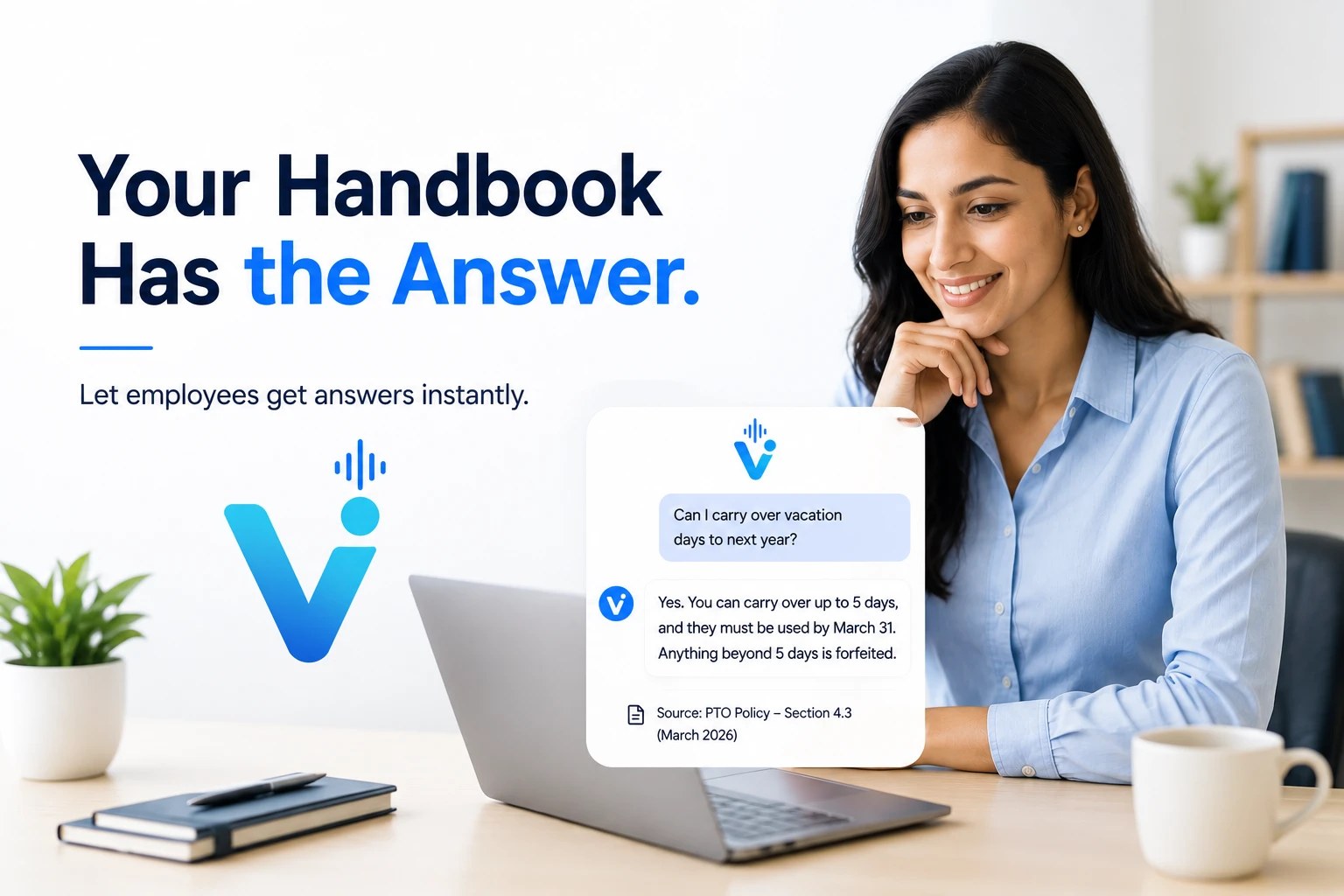
Every HR team lives the same loop. An employee needs to know whether unused vacation days carry over. The answer exists - it has existed for years, in section 4.3 of the handbook, on page two of the PTO policy, on that intranet page from the last benefits refresh. But finding the answer means remembering where the handbook lives, opening a 60-page PDF, and guessing the right search term.
Pinging HR is faster. So everyone pings HR.
The result is a paradox familiar to every people team: the better your documentation, the more invisible it becomes - because the humans who maintain it and the humans who need answers both default to HR. HR becomes a lookup service for its own documents, and the actual work of an HR team - people, hiring, development, the hard conversations - gets done in the gaps between interruptions.
The onboarding week, on repeat
Nowhere is the loop tighter than onboarding. Every new hire asks the entire FAQ from scratch: how do I enroll in benefits, when is the enrollment deadline, what’s the holiday calendar, how do expenses work, who do I ask about equipment? These aren’t bad questions. They’re excellent questions - asked one at a time, by every single hire, to the same three people, forever.
And the new hire experiences the other side of it: day-one questions that feel too small to bother a busy HR team with, so they go unasked, and the first week is a little more confusing than it needed to be.
What changes when the handbook can hold a conversation
A Vadami assistant is given exactly the sources HR already maintains: the handbook, the benefits guides, the policy documents, the published policy pages, and nothing else. Employees ask in plain language, typed or spoken, in their own words:
Notice what the answer includes: which document, and which version. The assistant cites its source, because it only has sources. It answers from the content HR approved, or it says it doesn’t know. It does not improvise policy. For a people team, that property isn’t a technical detail; it’s the whole ballgame. An assistant that guessed would be worse than no assistant at all.
The first week becomes a conversation instead of a scavenger hunt: “It’s my first week, what do I need to do?” answered from your own onboarding checklist, at 9 PM the night before day one, when the nervous new hire is actually wondering about it.
And for multilingual workforces - plants, hospitality, logistics, healthcare - there’s a quieter win that may matter most of all: Vadami assistants hold conversations in the employee’s language, even when the handbook is written in English. The policy finally reaches everyone it was written for.
Deflection with dignity
Let’s name the worry, because your employees will: is this a wall between people and HR?
It’s the opposite, done right. The goal is not fewer conversations with HR - it’s that conversations with HR are the ones that need a human. An assistant states policy; it does not grant exceptions, interpret disputes, or discuss anyone’s individual records. The moment a question crosses from “what does the policy say?” into “can you make an exception for my situation?”, the answer is a handoff to a person - and Vadami assistants can be equipped to deliver that handoff as a structured request to the right queue, details attached, so the employee tells their story once.
HR gets its hours back from the lookup loop. Employees get instant answers without the “am I bothering someone?” tax. The humans meet where human decision is actually required.
Governed by design
Internal content demands more control, not less, and this is where the architecture does the reassuring:
When the policy changes, you update the document and the assistant’s knowledge updates with it - one source of truth, which is what the handbook was always supposed to be.
Where to start
You don’t need a transformation program. You need one document set and one honest question: what did people ask HR this week that the handbook already answers? That list is your assistant’s job description.
Vadami runs live assistants you can try right now at vadami.ai, and websitesdemo.vadami.ai shows the full install experience. To stand one up on your own content, start at websites.vadami.ai, or write to us at info@vadami.ai and tell us about your handbook. Your next step is simple: try a live assistant or start your install.
It has the answers. It’s time somebody opened it.